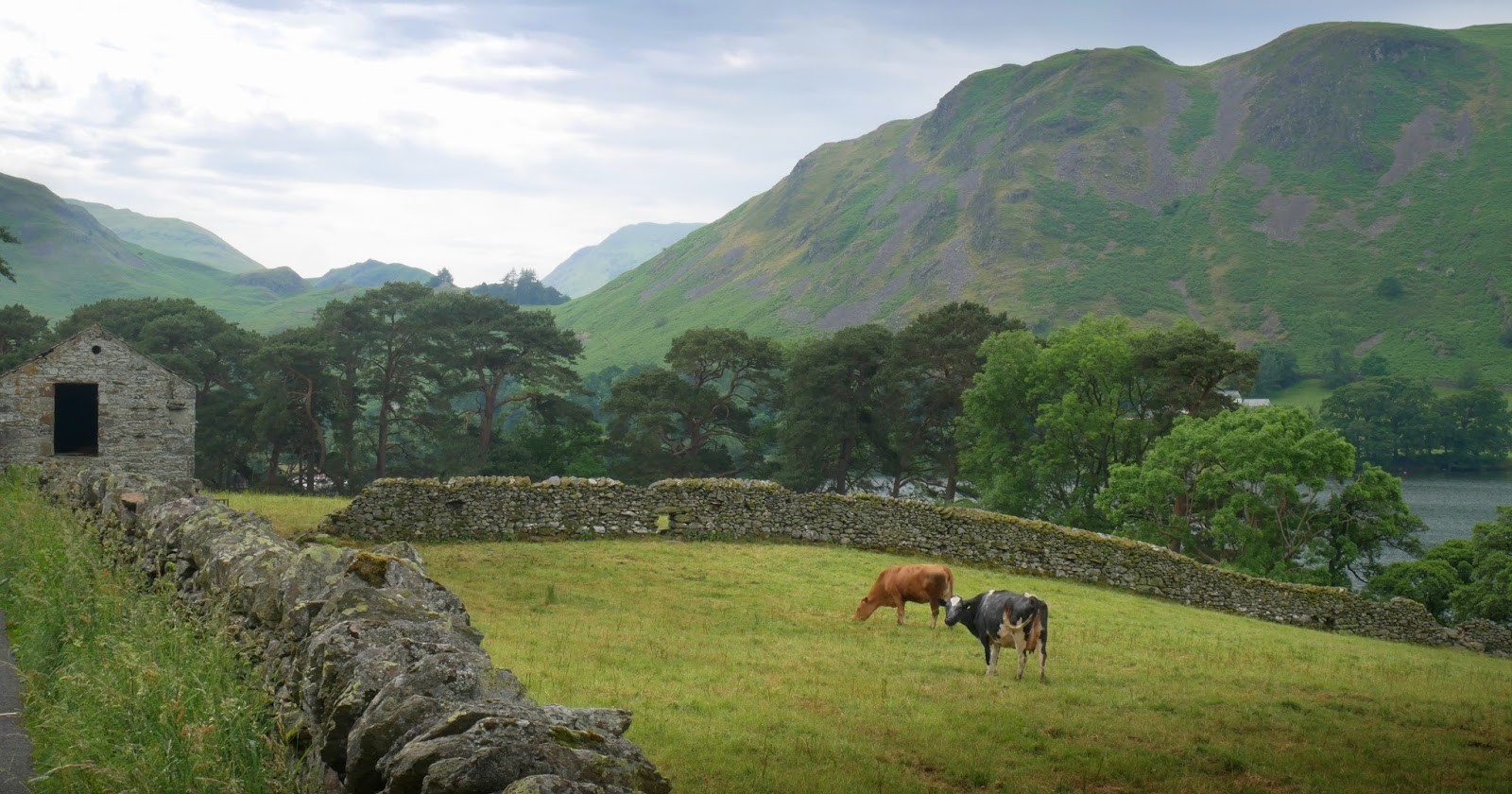
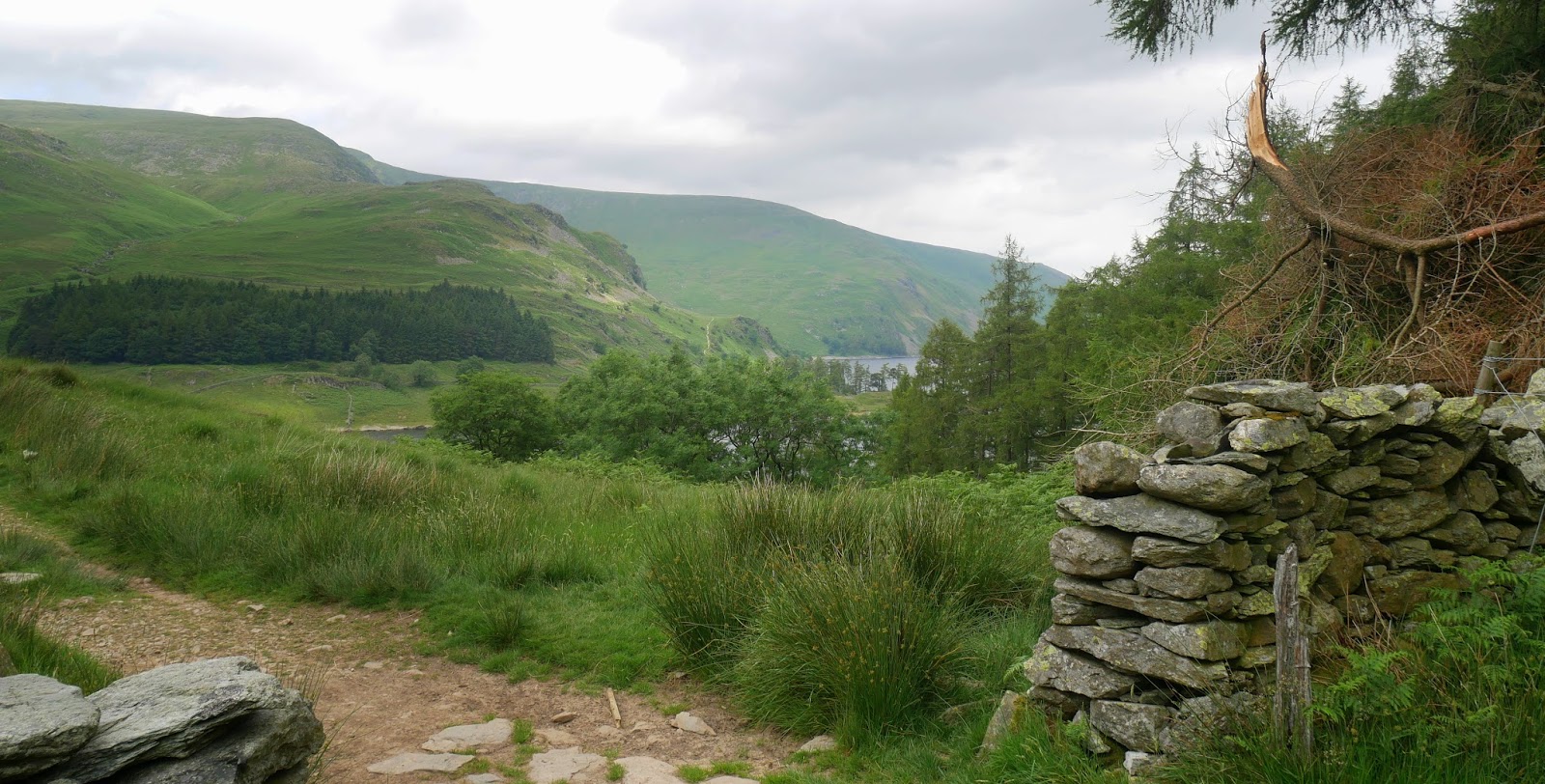
Ullswater is the second largest lake in the Lake District, being approximately nine miles long and 0.75 miles wide with a maximum depth of slightly more than 60 metres.
Many regard Ullswater as the most beautiful of the English lakes. It is a typical Lake District narrow "ribbon lake" formed after the last ice age when a glacier scooped out the valley floor and when the glacier retreated, the deepened section filled with meltwater which became a lake. A total of three separate glaciers formed the lake. The surrounding mountains give Ullswater the shape of a stretched 'Z' with three distinct segments (or 'reaches') that wend their way through the surrounding hills.
For much of its length Ullswater forms the border between the ancient counties of Cumberland and Westmorland.