Monday, 22 August 2016

Along the River Thames and Hampton Court Park (Home Park)

I took the passenger ferry across the Thames from Hampton and walked along the river bank to Hampton Court. After a visit to the gardens it was then back along the River bank towards Kingston before turning off into Hampton Court Park (also known as Home Park).
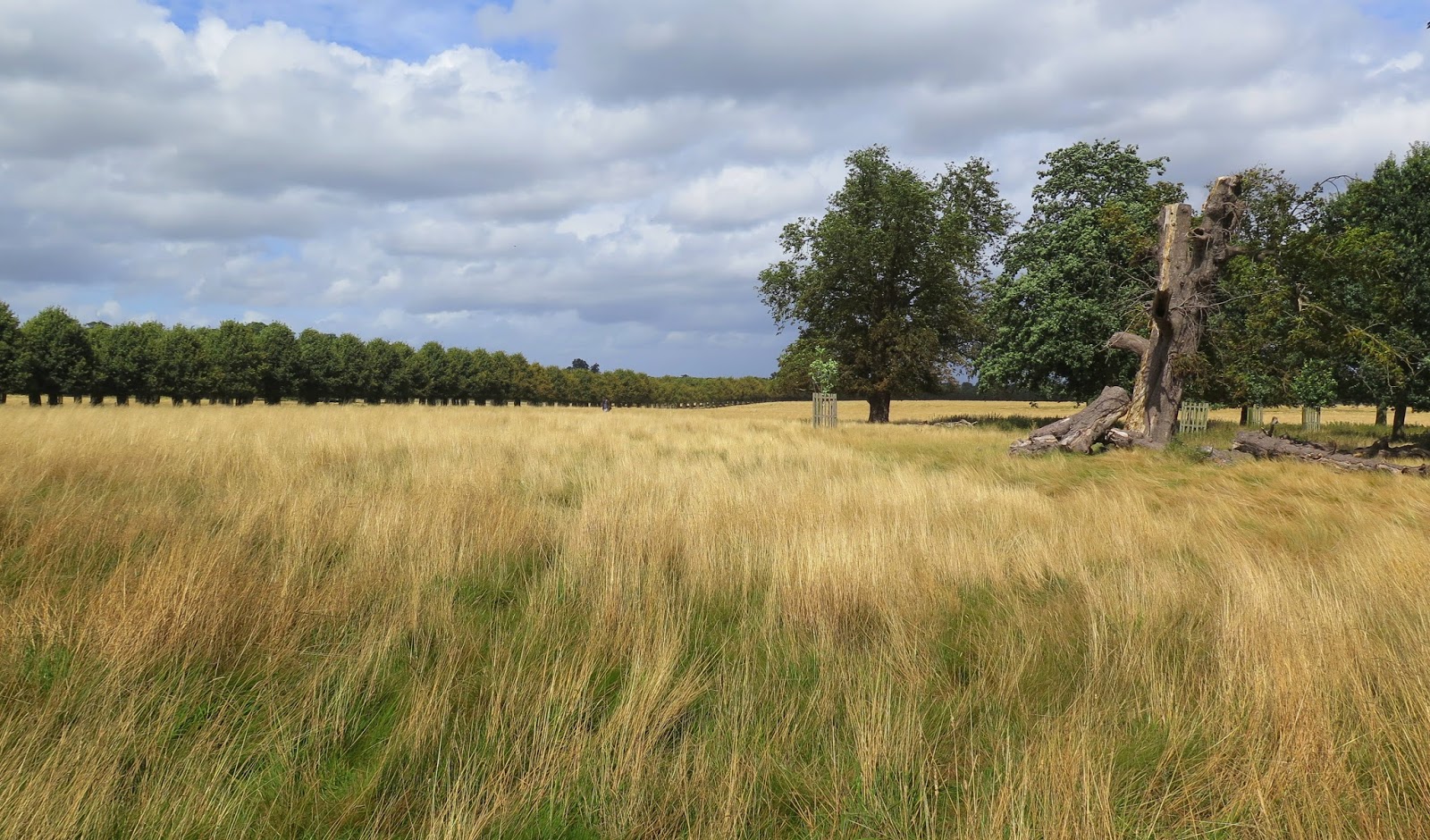
Hampton Court Park, adjacent to Hampton Court Palace and Gardens is a royal park managed by the Historic Royal Palaces. In 2014, part of it was designated a biological Site of Special Scientific Interest together with Bushy Park and Hampton Court Golf Course.
It is a walled deer park of around 700 acres (280 ha), with a herd of fallow deer, and has been open to the public since 1894. The A308 road and the River Thames form its boundaries. North of the A308 is Bushy Park. The Royal Mews still graze some of their horses on the park in the summer.
The Long Water runs roughly eastward from the back of Hampton Court Palace and at the eastern end is the Golden Jubilee Fountain.




Hampton Court Palace Gardens

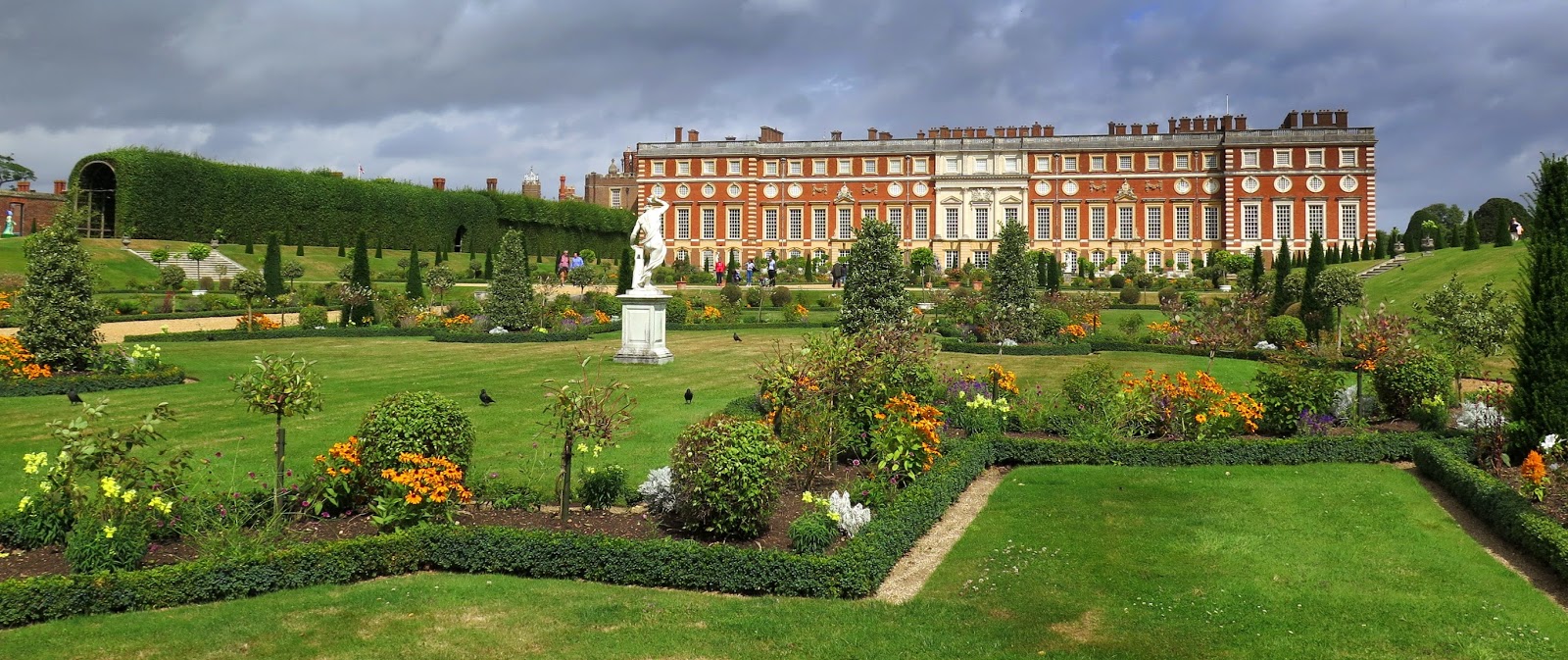
Hampton Court Palace is a royal palace in Richmond upon ThamesGreater LondonEngland, 11.7 miles (18.8 kilometres) south west and upstream of central London on the River Thames. Redevelopment began to be carried out in 1515 for Cardinal Thomas Wolsey, a favourite of King Henry VIII. In 1529, as Wolsey fell from favour, the King seized the palace for himself and later enlarged it. Along with St James's Palace, it is one of only two surviving palaces out of the many owned by King Henry VIII.
In the following century, King William III's massive rebuilding and expansion project, which destroyed much of the Tudor palace, was intended to rival Versailles. Work ceased in 1694, leaving the palace in two distinct contrasting architectural styles, domestic Tudor and Baroque. While the palace's styles are an accident of fate, a unity exists due to the use of pink bricks and a symmetrical, if vague, balancing of successive low wings. King George II was the last monarch to reside in the palace.
The grounds as they appear today were laid out in grand style in the late 17th century. There are no authentic remains of Henry VIII's gardens, merely a small knot garden, planted in 1924, which hints at the gardens' 16th-century appearance. Today, the dominating feature of the grounds is the great landscaping scheme constructed for Sir Christopher Wren's intended new palace. From a water-bounded semicircular parterre, the length of the east front, three avenues radiate in a crow's foot pattern. The central avenue, containing not a walk or a drive, but the great canal known as the Long Water, was excavated during the reign of Charles II, in 1662. The design, radical at the time, is another immediately recognizable influence from Versailles, and was indeed laid out by pupils of André Le Nôtre, Louis XIV's landscape gardener.


Sunday, 7 August 2016

VWNW 2016 Tatton Park

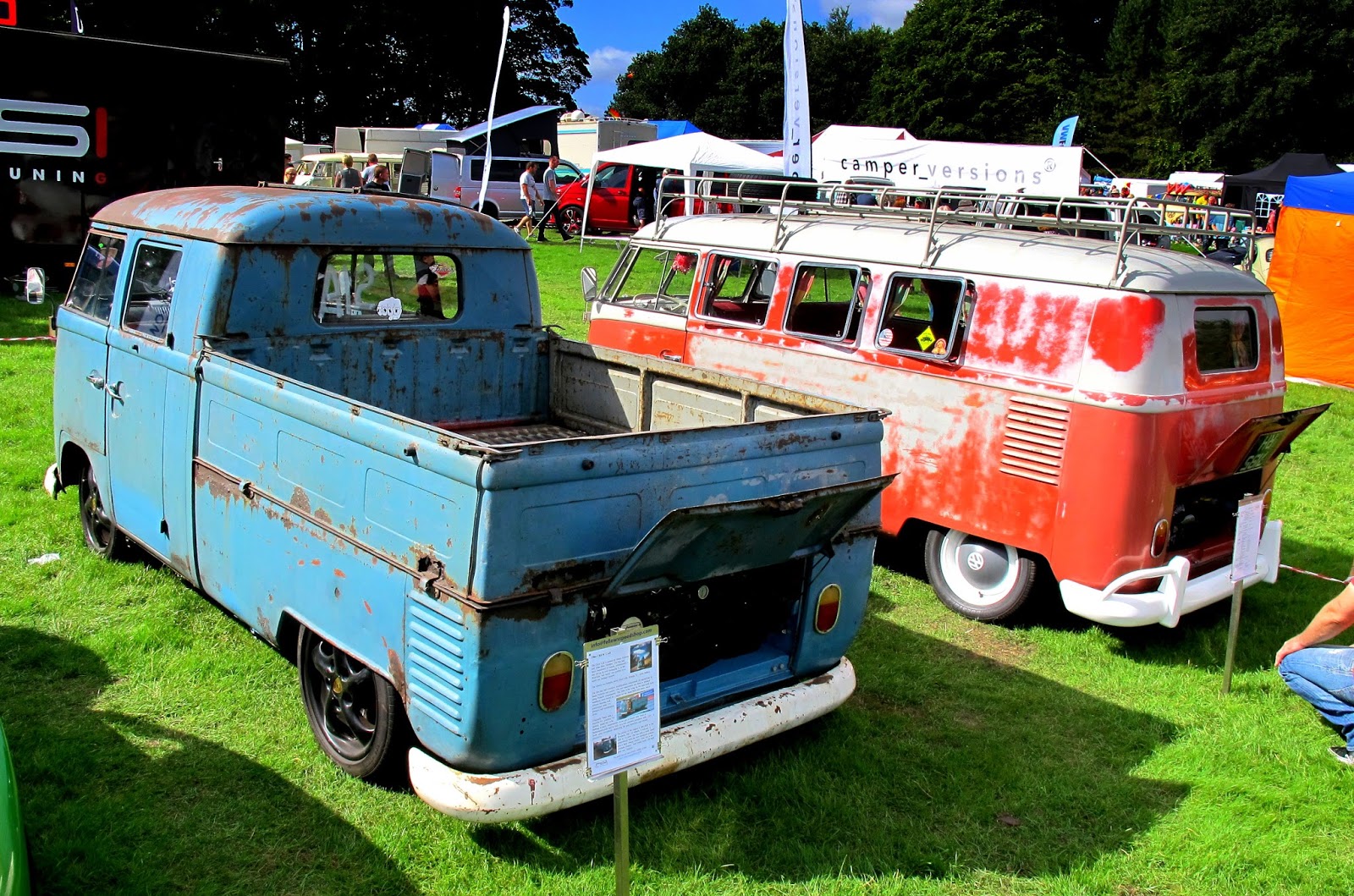
Another year and another visit to VWNW at Tatton Park. This time though, Skooby and some of his Brazilian friends were part of the show.


As well as our Brazilian built Kombi's, the rarely seen Brazilian Market only Karman Ghia TC was on display. A real beauty.