Saturday, 6 April 2013

Barmouth bridge

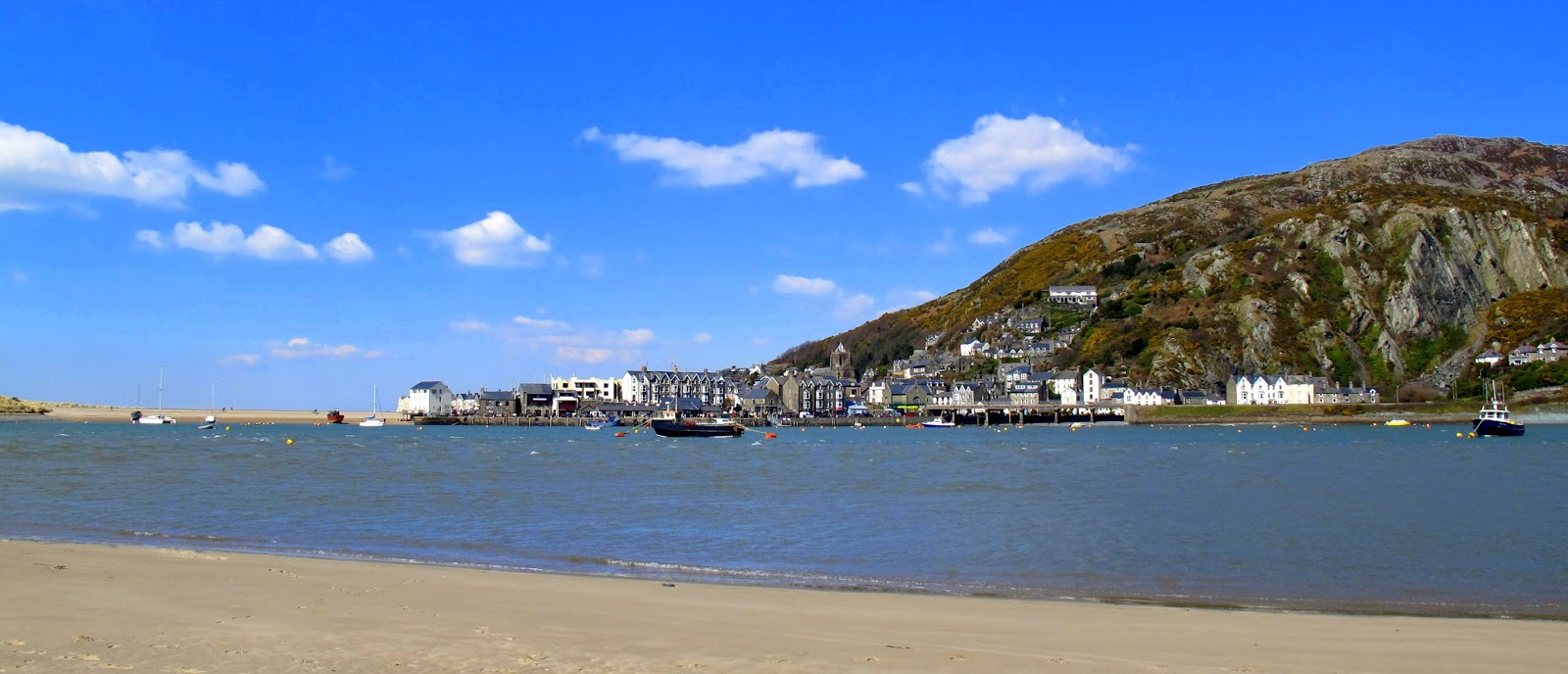
The Barmouth Bridge is a single-track largely wooden railway viaduct that crosses the estuary of the Afon Mawddach river on the coast of Cardigan Bay between Morfa Mawddach and Barmouth in GwyneddWales. A footbridge is incorporated on the landward side and pedestrians can walk by the side of the track across the river on payment of a toll of 90 pence (although there is no-one collecting at the moment so its free). 
The distance is about 900 yards (820 m). The viaduct carries the Cambrian Line, the main line of the former Cambrian Railways, which runs from Shrewsbury to Pwllheli.
The bridge was built by the Aberystwyth and Welsh Coast Railway and opened in 1867. As built, it included a lifting drawbridge section to permit the passage of tall ships, was constructed entirely of wood. The drawbridge section, at the northern end of the bridge, was rebuilt in 1901 as a swing bridge with two steel spans.


Friday, 5 April 2013

River Dwyryd estuary

The village of Portmeirion lies on the estuary of the River Dwyryd. Access to the village also gives you access to walks along the estuary shore with views back up the river and around to Porhtmadog.


I am not a number - Portmeirion


Portmeirion is a popular tourist village in GwyneddNorth Wales. It was designed and built by Sir Clough Williams-Ellis between 1925 and 1975 in the style of an Italian village and is now owned by a charitable trust.
Portmeirion has served as the location for numerous films and television shows, most famously serving as The Village in the 1960s television show The Prisoner 
 The Prisoner was first broadcast in 1967 - the year I was born.


Porthmadog to Portmeirion

Up early to catch the train (only run every 2 hours) to Porthmadog for the walk back to Portmerrion.

Porthmadog developed in the 19th century as a port exporting slate to England. Since the decline of the slate industry it has become an important shopping centre for the surrounding area and a popular tourist destination. It has easy access to the Snowdonia National Park and is the terminus of the Ffestiniog steam Railway.


Porthmadog came into existence after William Madocks, in 1811, built a sea wall, theCob, to reclaim a large proportion of Traeth Mawr from the sea for agricultural use. The diversion of the Afon Glaslyn caused it to scour out a new natural harbour which had a deep enough draught for small ocean-going sailing ships,[6] and the first public wharves were built in 1825. Individual quarry companies followed, building a series of wharves along the shore almost as far as Borth-y-Gest, and slate was carted from Ffestiniogdown to the quays along the Afon Dwyryd, then boated to Porthmadog for transfer to seagoing vessels.[7]

In the second half of the 19th century Porthmadog was a flourishing port, its population expanding from 885 in 1821 to over 3,000 by 1861. The rapidly expanding cities of England needed high quality roofing slate, which was transported to the new port by tramway from the quarries in Ffestiniog andLlanfrothen.[6] The Ffestiniog Railway opened in 1836, followed by the Croesor Tramway in 1864 and the Gorseddau Tramway in 1856, and by 1873 over 116,000 tons (117,800 t) were exported through Porthmadog in more than a thousand ships


Wednesday, 3 April 2013

Morfa Mawddach Peninsula

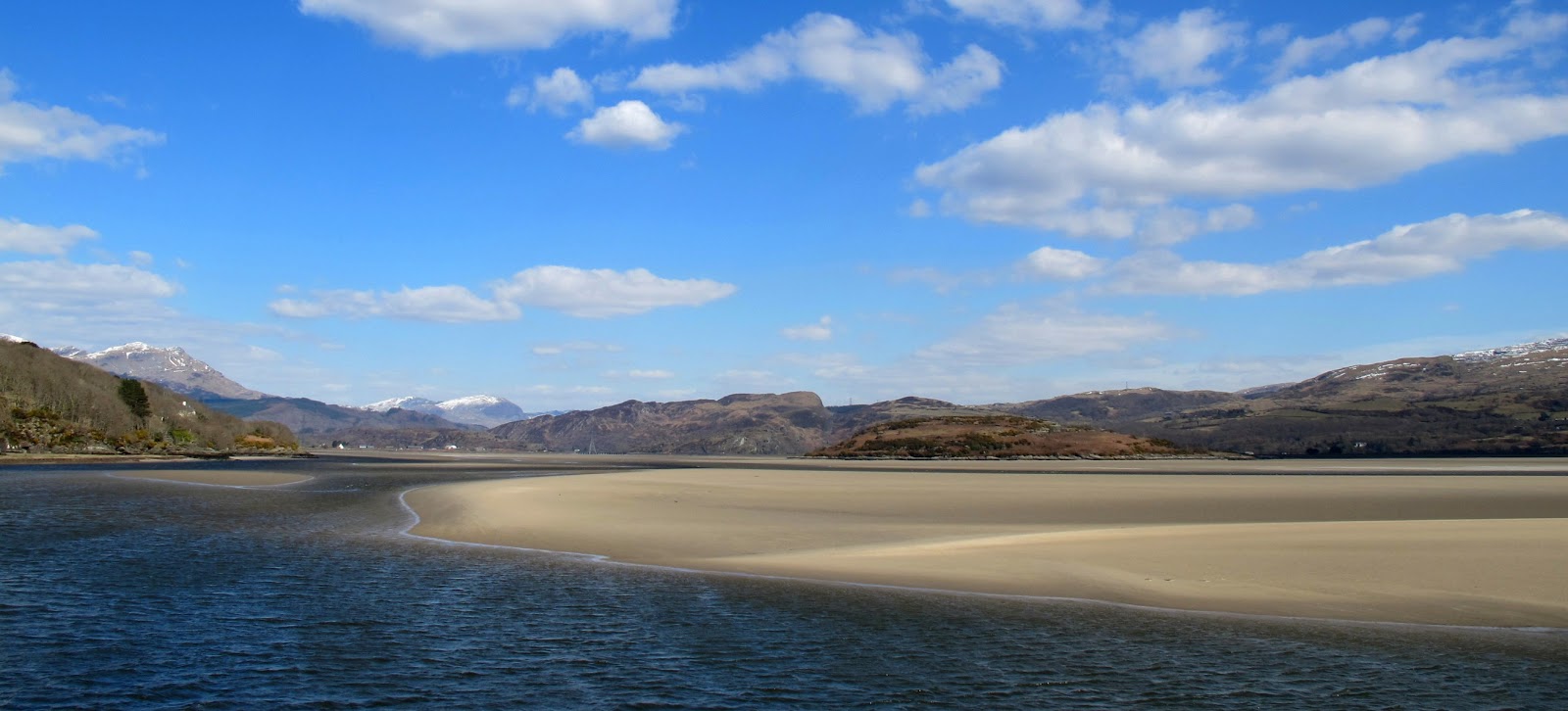
On the edge of Snowdonia in North Wales, is Morfa Mawddach and its small dune covered peninusla stretching out towards Barmouth.